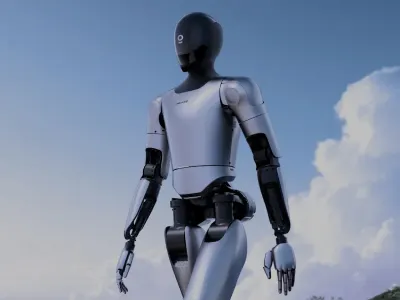
Commercial robotHumanoid
MagicLab MagicBot Gen1
MagicBot Gen1 robot profile with source-backed specifications.
Data & sources
- Official
- 1
- Unofficial research
- 2
Key specifications
- Weight
- Approximately 70 kg
- Total degrees of freedom
- 42 DoF
- Single-arm payload
- Up to 7.5 kg
- Runtime
- 3–5 h
Specifications
Physical specifications
3- Standing dimensions
1.740 × 0.580 × 0.280 m
- Leg segment lengths
960 mm (510 mm + 450 mm)
- Weight
Approximately 70 kg
Actuation
10- Total degrees of freedom
42 DoF
- Drive system description
High-performance drive system for stable, efficient continuous operation
- Structure materials
Aluminum alloy main structure; PC+ABS plastic exterior
- Reducer types
Harmonic reducer / planetary reducer
- Joint torque max nm
≥350 N·m
- Active degrees of freedom
42 active DoF
- Neck dof
2 DoF (yaw ×1; pitch ×1)
- Degrees of freedom per arm
7 DoF (shoulder ×3; elbow ×1; wrist ×3)
- Waist degrees of freedom
2 DoF (yaw ×1; roll ×1)
- Degrees of freedom per leg
6 DoF (hip ×3; knee ×1; ankle ×2)
Battery and power
3- Battery capacity
25 Ah (1.35 kWh) Ah; kWh
- Runtime
3–5 h
- Charging time
3 h
Mobility
9- Adaptive navigation
In-house navigation algorithms adapt to diverse terrains and challenging scenarios
- Self learning walking optimization
Motion control network supports self-learning walking-posture optimization
- Disturbance resistant terrain traversal
Resists disturbances and impacts for smooth traversal of complex terrains
- Walking speed
≥1.111 m/s
- Supported terrains
All terrains
- Autonomous navigation
Yes
- Autonomous obstacle avoidance
Yes
- Mapping method
Manual mapping
- Map management
Yes
Manipulation
4- Single-arm payload
Up to 7.5 kg
- Total body static load kg
Up to 40 kg
- Reach
0.8 m
- Single hand dof
11 DoF (6 active; 5 passive)
Sensors
2- Perception sensor configuration
LiDAR; three fisheye cameras; RGB-D cameras on head and waist
3D LiDAR; 2 depth cameras; 3 fisheye cameras
- Face recognition
Face recognition
Compute
4- Visual servoing imitation learning
6D visual servoing and full-body imitation learning on a floating-base design
- Computing module
8-core CPU + 100 TOPS AI processor
- Ota upgrade
Supported
- Secondary development
Yes
Other
6- Audio hardware
Omnidirectional microphone array and speakers
- Wifi standard
6
- Cellular network
5G
- Bluetooth standard
5.2
- Voice interaction
Voice commands, chatbot, and intelligent voice guidance
- Control devices
Android/iOS smartphone or tablet and controller
Gallery